
You’re looking to hire a financial advisor and come across the concept of “flat fees”.
Fewer conflicts? Lower fees? Sounds great!
But what do flat fee advisors actually do and what does a “flat” fee even mean?
A growing number of financial advisors now advertise flat fees instead of the traditional model of charging a percentage of the client’s portfolio. That sounds simple, but the label can describe very different services and pricing structures.
As a consumer, it is important to know both what you are getting and how you are being charged. While many articles have been written comparing AUM fees to flat fees, there is a lack of information describing the flat fee landscape.
This article is the first in a three-article series that explains the major flat fee service and pricing models, evaluates their tradeoffs, and offers practical questions to help you choose an advisor whose services and incentives fit your needs.
The Flat Fee Movement is Disrupting the Financial Advice Industry
When I started my firm in 2016, this model was largely absent from consumer conversations. The industry was—and remains—dominated by fees based on assets under management (AUM).
According to Google Trends, the excitement around flat fees began around 2023, and has only increased since then.
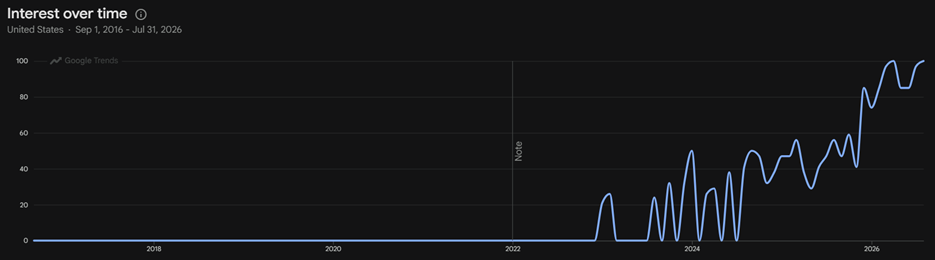
Until recently, advisor fees weren’t really a point of discussion. The industry had coalesced around a 1% fee, and many consumers just took the fee as a given.
The flat fee movement seems to have blown the fee discussion wide open.
The growth of flat-fee options is good news for consumers, but it has also made the marketplace harder to evaluate. There is no governing body that defines the term “flat fee” and with the popularity of the term growing, some in the industry may use it for purely marketing purposes. Even industry experts have varying definitions of flat fees.
While flat fees may have added to the complexity in the industry, the payoff should prove to be a huge net positive for investors. Flat fees have the potential to increase transparency, reduce conflicts of interest, and make advice accessible to a broader range of clients.
One-time vs Ongoing Service Models
To understand the landscape, first consider the various service models employed by flat-fee firms. The key initial distinction is whether the engagement is temporary or ongoing.
A project-based advisor addresses a defined question or delivers a specified plan for an agreed-upon fee. These types of arrangements can work well for younger investors or DIYers who just want one-time or ad hoc guidance.
The fee for this service could be considered a flat fee if it is quoted upfront as a fixed fee for service, rather than an hourly rate – for example, an advisor offers to provide a retirement analysis for a flat fee of $5,000.
Advisors have been offering project-based and hourly services for many years. While historically not particularly common, it is growing, along with the flat fee movement.
The more novel model for financial advice is to offer ongoing services for a flat annual amount. Most of this article will focus on the various ongoing service and fee models that are changing the landscape of financial advice.
Advice-Only vs Investment Management
Among advisors who offer ongoing services, there is a further distinction that is important to consider when hiring an advisor – whether they offer investment management.
Advice-only advisors provide clients with recommendations, but they don’t implement that advice or take on the responsibility and liability that comes with managing money. The client must choose a custodian, open accounts, and make their own contributions, withdrawals and trades – though some advice-only advisors will guide clients through each step.
This arrangement can work well for people who have smaller portfolios but want ongoing advice, who have most of their assets inside 401k accounts that can’t be managed, or who prefer to manage their own investments.
In contrast, some flat fee advisors include investment management as part of the service. These advisors will help you open accounts, transfer assets, set up contributions or withdrawals, rebalance investments, and execute tasks like Roth conversions.
In many ways, these advisors’ services look similar to many of their AUM counterparts.
This service works well for those who have money to manage and prefer to delegate.
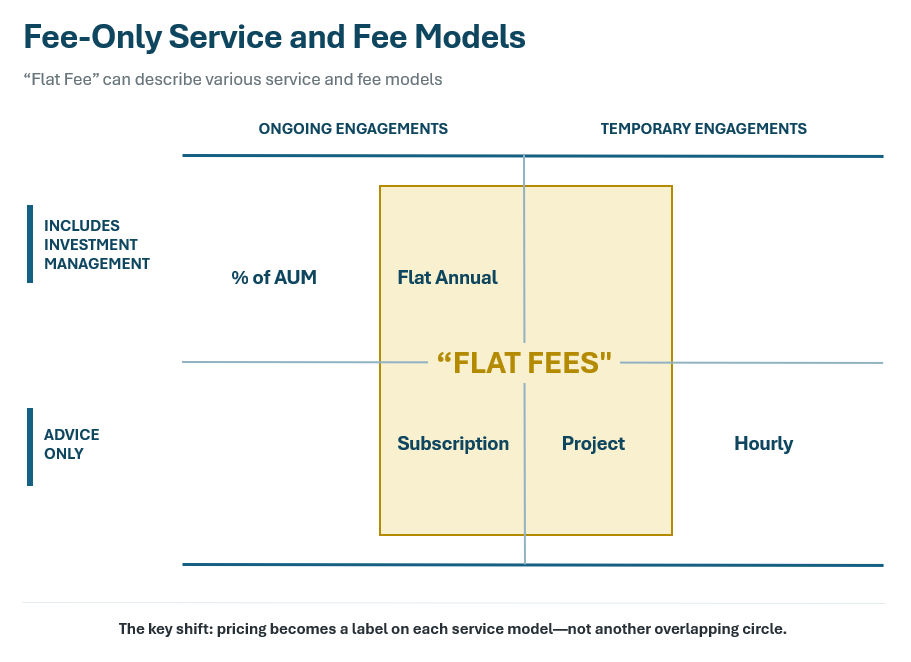
There’s not one right approach for everyone, and that is where all the new service models really shine. There are options for lots of different situations. As this chart illustrates, “flat fees” can be applied to many of the existing service and fee models.
What else is included with the flat fee?
The high-level service models are only the starting point; you should also consider the specific services included.
The biggest variable is probably taxes. Many advisors offer tax planning as part of their services, and some include tax preparation as well.
If an advisor advertises tax planning, be sure to understand what that entails. Do they review your tax return for errors and omissions? Do they prepare a detailed tax projection every year and help you make important decisions about income producing actions like IRA withdrawals, Roth conversions, and realizing of capital gains?
If they offer tax preparation, is it included in the fee or an additional cost? If it is included, are there limits to what is covered?
Other aspects of planning that are important to you should be explored as well. How involved are they in the estate planning process? What about insurance?
In addition, it’s important to know who will be delivering the service and how often they will meet with you.
The bottom line is, the more you know about what you’re getting, the better you will be able to judge the value versus the fee.
Ready to compare what these services may cost? Read Part 2 for a breakdown of the major flat-fee pricing models, their tradeoffs, and the questions that can help you judge whether a fee is right for you.

James is the founder of SwitchPoint Financial Planning and a pioneer of the flat fee movement. He is passionate about challenging long-standing practices in the financial advice industry and refuting misconceptions about investing in an effort to help people make better decisions with their money.